
Quantum Computing Complete Detailed Guide
An in-depth academic reference exploring the principles, technologies, applications, and future of quantum computing.
Contents
1. Introduction to Quantum Computing
Quantum Computing is a revolutionary computing paradigm that harnesses the principles of quantum mechanics to process information. Unlike classical computers that use bits as the smallest unit of data, quantum computers use quantum bits or qubits, which can exist in multiple states simultaneously.
This fundamental difference allows quantum computers to perform certain calculations exponentially faster than even the most powerful classical supercomputers. Quantum technology is considered one of the most promising frontiers in modern science and computing.
The importance of quantum computing lies in its potential to solve complex problems in cryptography, materials science, drug discovery, optimization, and artificial intelligence that are currently intractable for classical systems.
2. History of Quantum Computing
The theoretical foundations of quantum computing emerged from quantum physics in the early 20th century. In 1981, physicist Richard Feynman proposed the idea of simulating quantum systems using quantum computers. David Deutsch further developed the concept of universal quantum computation in 1985.
Major milestones include Peter Shor’s development of Shor’s algorithm in 1994 and Lov Grover’s algorithm in 1996. The 21st century has seen rapid progress in hardware with companies like IBM, Google, and IonQ building increasingly capable quantum processors.
3. Fundamental Concepts
Qubits
A qubit is the basic unit of quantum information. While a classical bit can be either 0 or 1, a qubit can exist in a superposition of both states simultaneously, represented mathematically as α|0⟩ + β|1⟩, where α and β are complex probability amplitudes.
Superposition and Entanglement
Superposition allows quantum computers to process multiple possibilities at once. Entanglement is a uniquely quantum phenomenon where two or more qubits become correlated such that the state of one instantly influences the others, regardless of distance.
4. Classical vs Quantum Computing
Classical computers process information sequentially using binary bits. Quantum computers leverage parallelism through superposition and can explore vast solution spaces simultaneously. This gives them a theoretical exponential advantage for specific problems.
5. How Quantum Computing Works
Quantum computing operates through quantum gates that manipulate qubit states, forming quantum circuits. The computation ends with measurement, which collapses the quantum state into a classical outcome. Results are inherently probabilistic, often requiring multiple runs for accuracy.
6. Quantum Algorithms
Shor’s Algorithm can factor large numbers exponentially faster than classical algorithms, threatening current encryption methods. Grover’s Algorithm provides quadratic speedup for unstructured search problems.
7. Quantum Hardware
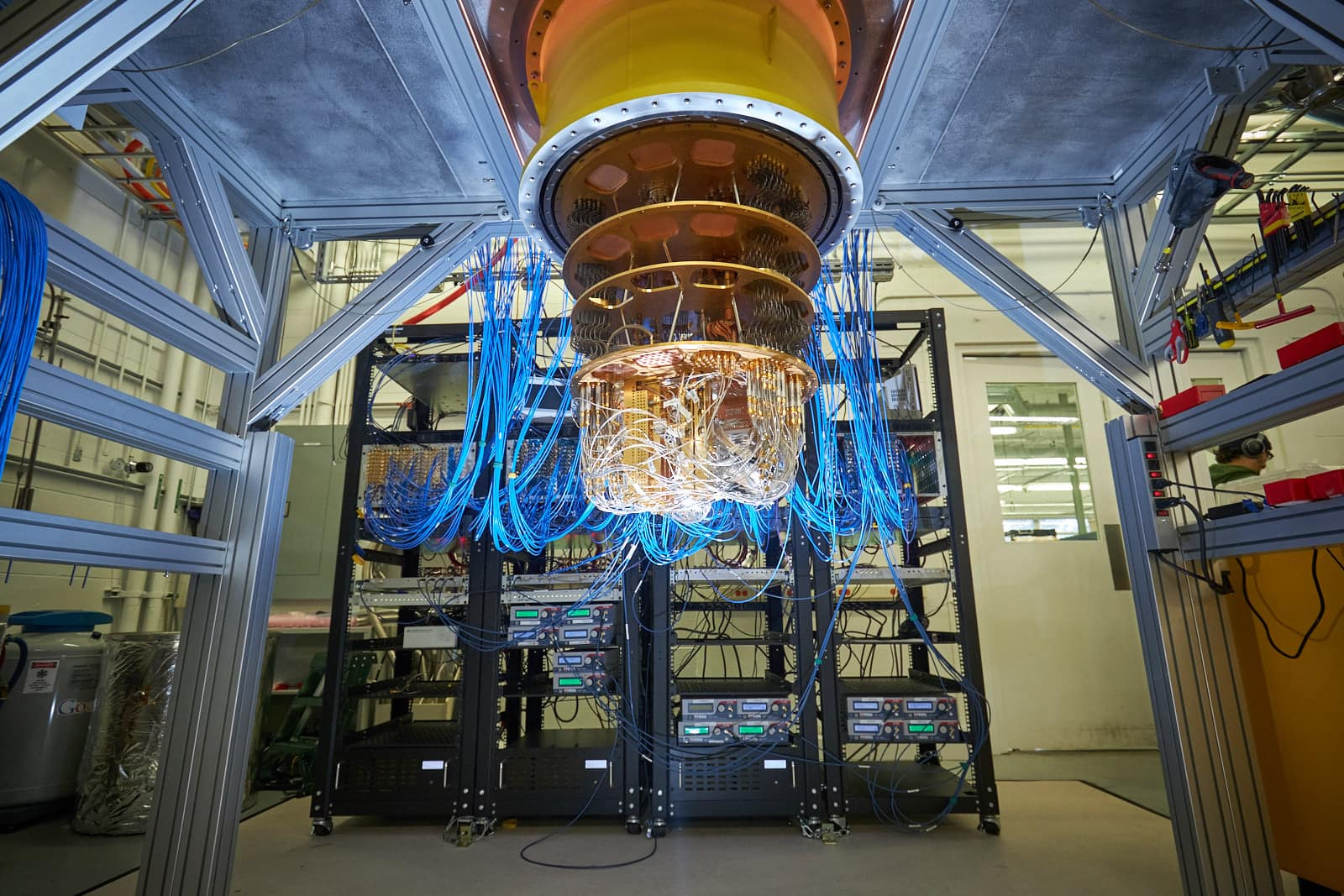
Current quantum hardware includes superconducting circuits (used by IBM and Google), trapped ions, and photonic systems. Maintaining quantum coherence remains one of the biggest engineering challenges.
8. Real World Applications
Quantum computing holds immense promise in drug discovery by simulating molecular interactions, optimizing financial portfolios, enhancing machine learning models, and improving climate simulations through better modeling of complex systems.
9. Quantum Cryptography
Quantum Key Distribution (QKD) uses quantum mechanics to securely distribute encryption keys. Any eavesdropping attempt disturbs the quantum states, making interception detectable.
10. Limitations of Quantum Computing
Quantum systems are extremely sensitive to noise and decoherence. Error rates remain high, and building fault-tolerant quantum computers requires significant advances in quantum error correction.
12. Future of Quantum Computing
Achieving quantum supremacy and eventually fault-tolerant quantum computers will transform multiple industries. Hybrid quantum-classical systems are expected to be the practical near-term solution.
13. Quantum Computing and AI
Quantum Machine Learning (QML) aims to accelerate training and improve capabilities of AI models. Quantum computers could dramatically speed up optimization problems central to machine learning.
14. Career Paths in Quantum Computing
The field offers opportunities for Quantum Physicists, Quantum Software Engineers, Quantum Algorithm Developers, and Research Scientists. Strong backgrounds in quantum mechanics, linear algebra, and programming are essential.
15. Important Quantum Technologies
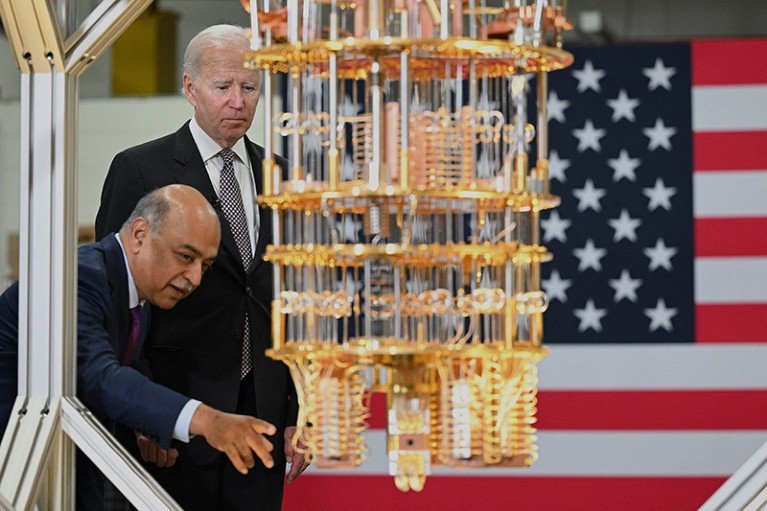
Pioneer in cloud-based quantum computing access.
Conclusion
Quantum computing represents a paradigm shift in information processing. While still in its early stages, the technology promises to solve some of humanity’s most complex challenges and reshape the future of computing, cryptography, and scientific discovery.
Continued research, investment, and international collaboration will determine how quickly quantum computing transitions from laboratory promise to widespread practical impact.